


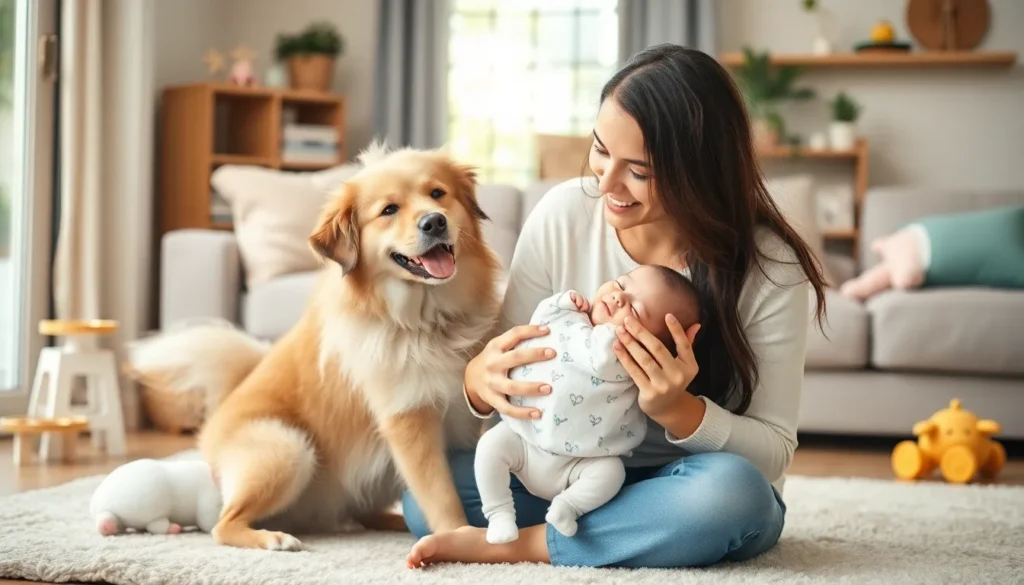
Welcoming a new baby into the family is an exciting time, but it can also be a bit daunting, especially when pets are part of the household. Introducing pets to a newborn requires careful planning and consideration to ensure a smooth transition for everyone involved. Pets can be curious and unpredictable, so understanding their behavior is crucial for a harmonious environment.
By taking the right steps, families can foster a loving relationship between their pets and the new baby. This not only helps pets adjust to the changes but also sets the foundation for a lifelong bond. With a little patience and preparation, parents can create a safe and welcoming space for both their furry friends and their little ones.
Understanding the Importance of Introducing Pets to Baby
Introducing pets to a baby requires careful attention to create a safe, harmonious environment. Understanding the benefits and possible risks helps families navigate this significant transition.
Benefits of Early Introduction
Early introduction fosters familiarity between pets and babies. It builds trust, reducing the chances of jealousy or aggression. Establishing this connection encourages positive interactions that can benefit both.
- Socialization: Introducing pets enhances the baby’s social skills. Babies exposed to pets learn empathy and responsibility from a young age.
- Bonding: A strong bond develops through shared experiences, such as playing or exploring together. These interactions nurture a loving relationship.
- Health Benefits: Research shows that children raised around pets tend to experience fewer allergies and asthma symptoms. Pets contribute to improved immune function in children.
- Emotional Support: Pets provide comfort, helping babies establish a sense of security. This emotional support can contribute positively to a child’s overall development.
Possible Risks to Consider
Understanding the risks associated with introducing pets is crucial for safety. Families must evaluate pet behavior before any interactions.
- Allergies: Some infants may develop allergies to animal dander. Consulting a pediatrician can identify potential risks early.
- Injury: Pets, especially dogs, may react unpredictably to a baby’s sudden movements or sounds. Supervising interactions helps prevent accidental injuries.
- Behavior Changes: Some pets may exhibit behavioral changes due to a new family member. Monitoring any signs of stress or aggression can help address issues promptly.
- Illness Transmission: Pets can carry zoonotic diseases. Maintaining regular veterinary care and hygiene practices minimizes health risks for babies.
Preparing Your Pet for the New Arrival
Preparing a pet for a new baby involves understanding their behavior and training them effectively. This helps create a safe and welcoming environment for both the pet and the baby.
Assessing Your Pet’s Behavior
Assessing a pet’s behavior helps identify potential challenges. Monitor interactions around infants or children to determine reactions. Signs of anxiety or aggression indicate more attention is necessary. Observing body language, such as growling or raised fur, can provide insight into emotional states. Consulting with a veterinarian or animal behaviorist may be beneficial for specific concerns.
Training and Preparing Your Pet
Training a pet before the baby’s arrival ensures a smoother transition. Incorporating basic commands like “sit,” “stay,” and “come” can increase safety. Gradually introducing baby-related sounds, such as crying or cooing, helps the pet acclimate. Setting boundaries for areas the pet should avoid is crucial. Familiarization with baby items, like strollers and toys, aids in reducing unfamiliarity. Consistent routines and positive reinforcement reinforce good behavior, ensuring both pet and baby coexist harmoniously.
The Introduction Process
Introducing a pet to a baby requires a thoughtful approach to ensure safety and comfort for both. Following a structured process can strengthen their bond over time.
Step-by-Step Guide to Introducing Pets to Baby
- Prepare the Pet: Familiarize the pet with baby noises, toys, and scents before the baby arrives. This acclimatization helps ease the transition.
- Create a Safe Space: Designate an area in the home for the pet, away from baby activities. This space offers a retreat for the pet when overwhelmed.
- Supervise Initial Meetings: Keep initial interactions between the baby and pet brief and closely monitored. Gradually increase the duration as comfort levels grow.
- Use Controlled Introductions: Introduce the pet to the newborn while the baby is in a secure position, such as a crib or stroller. This maintains safety and minimizes direct contact.
- Reward Positive Behavior: Use treats and praise to reward the pet for calm behavior around the baby. This positive reinforcement encourages a relaxed attitude.
- Monitor Stress Signals: Watch for signs of stress from the pet. If signs like excessive barking, hiding, or aggression appear, pause interactions and reassess the process.
- Schedule Routine Interactions: Consistent, scheduled interactions can build familiarity. Gradually involve the baby in pet-related routines, such as feeding or playtime.
Observing Interactions
Monitoring interactions between pets and babies is crucial for safety and comfort.
- Watch Body Language: Observe the pet’s body language for signs of discomfort or anxiety, such as tail tucking or flattened ears.
- Assess Baby’s Reactions: Pay attention to how the baby responds to the pet. Encourage gentle touches and positive engagement while ensuring the baby understands boundaries.
- Document Progress: Keep notes on each interaction to track behavior changes over time. This documentation aids in identifying patterns and adjusting approaches as needed.
- Maintain a Calm Environment: Reduce loud noises or sudden movements during interactions to promote a peaceful atmosphere for both the baby and pet.
By following these structured steps and observing interactions, families can foster a secure and loving relationship between pets and their children.
Creating a Safe Environment
Creating a safe environment plays a vital role in the successful introduction of pets to a new baby. Establishing clear boundaries and ensuring safety in shared spaces helps promote a harmonious relationship between the two.
Setting Boundaries for Pets and Baby
Setting boundaries is essential for maintaining safety and comfort for both pets and the baby. Designate specific areas in the home where the pet is allowed and restrict access to baby zones. Use baby gates or closed doors to prevent unintended encounters. Introduce clear rules for both the pets and the household. For example, pets should remain off furniture where the baby sits or sleeps. Teach the baby gentle touch by encouraging soft interaction with the pet to help prevent accidental rough handling. Strong, consistent boundaries foster a secure environment where both pets and babies can thrive.
Ensuring Safety in Shared Spaces
Ensuring safety in shared spaces involves minimizing risks and monitoring interactions. Keep pet toys, food, and litter away from baby areas to prevent exposure to harmful materials. Secure electrical cords and other items that may pose a choking hazard. When pets and babies share a space, actively supervise their interactions. Watch for signs of distress in pets, such as growling or sudden movements, and immediately intervene if necessary. A calm and controlled environment promotes positive experiences for both pets and babies, setting the stage for lifelong friendships. Regular cleaning and maintenance of shared spaces further enhance safety, reducing the risk of allergies or illness.
Ongoing Considerations
Ongoing considerations after introducing pets to a baby represent essential steps in fostering a harmonious environment. Continuous monitoring and adjustments ensure the well-being of both pets and the child.
Continuing to Monitor Interactions
Monitoring interactions between pets and babies remains critical for safety. Families should observe each encounter closely, looking for signs of stress in pets or overwhelming situations for babies. Signs such as growling, hissing, or increased agitation indicate a need for intervention. Establishing periods of supervised play fosters positive interactions while minimizing risks. Keeping a consistent schedule for these meetings helps pets adapt to the baby’s presence gradually. Creating a designated space for the pet to retreat when feeling stressed also enhances their comfort during this adjustment.
Adjusting as Baby Grows
Adjustments are necessary as babies grow and develop new abilities. Babies transition from being stationary to crawling or walking, which changes interactions with pets. Families should introduce pets to the baby’s evolving behaviors gradually. Training pets to respond positively to new actions, such as sudden movements or noisy toys, promotes a safe environment. Establishing new boundaries helps protect both pets and babies. It’s vital to reinforce commands that encourage gentle interactions as infants reach new developmental milestones. Promoting supervised playtime consistently, while also allowing pets their space, fosters healthy relationships over time.
Introducing pets to a new baby is a journey that requires thoughtful planning and patience. Families that take the time to prepare their pets and create a safe environment set the stage for a harmonious relationship between their child and furry friends.
By fostering familiarity and trust from the start, they can help their baby develop social skills and emotional resilience. Ongoing supervision and adjustments are key to ensuring safety and comfort as both the baby and pet grow together.
With the right approach, families can enjoy the unique bond that pets bring to their children’s lives, enriching their experiences and nurturing lifelong friendships.