






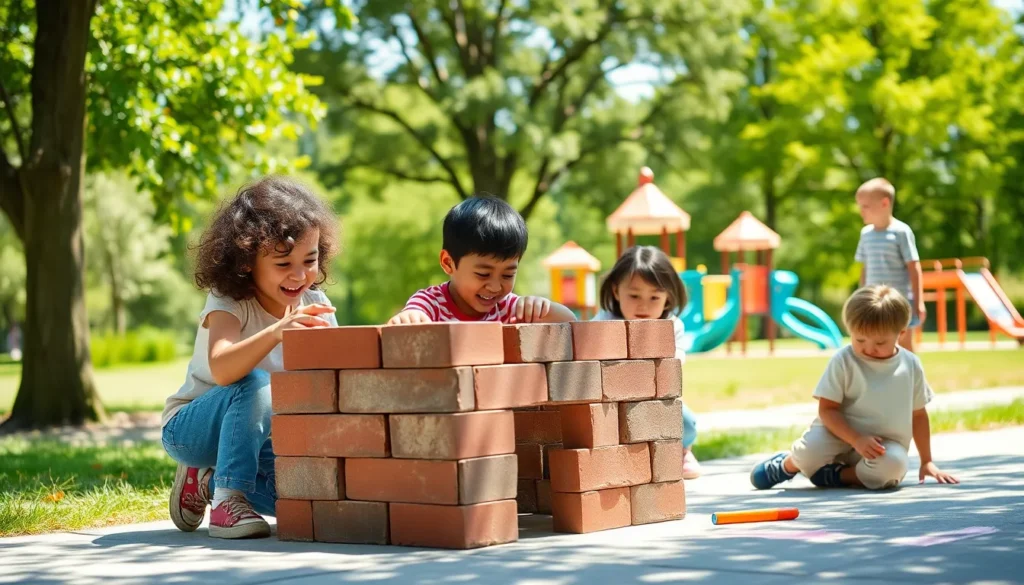
Playtime isn’t just for fun; it’s the secret sauce for a child’s growth and development. While adults might see a pile of toys as a mess waiting to happen, kids see a world of possibilities. They’re not just playing—they’re learning essential skills that’ll help them navigate life. From building towering block castles to engaging in imaginative role-play, each moment of play lays the foundation for critical thinking, social skills, and emotional resilience.
Role Of Play In Child Development
Play serves as a critical component in a child’s development. Through interactions and recreated scenarios, children learn to express emotions. Engaging in building tasks fosters spatial awareness. During imaginative play, children practice communication skills, enhancing their vocabulary and grammar.
Social skills thrive in cooperative play settings. Sharing toys or taking turns encourages negotiation and conflict resolution. Fine motor skills develop when children manipulate various materials. These activities prepare children for future academic challenges.
Play also contributes to cognitive development. Solving challenges during play enhances critical thinking. Children who engage in play-based learning exhibit improved problem-solving abilities. Activities like puzzles stimulate cognitive growth and encourage persistence.
Emotional resilience is nurtured through role-play. Children explore different feelings and perspectives in a safe environment. Cultivating empathy during play prepares them for real-world interactions. They learn to navigate social complexities by taking on various roles.
Physical health benefits from active play as well. Running, jumping, and climbing strengthen muscles and coordination. Outdoor play also encourages a connection with nature, promoting overall well-being. Engaging in physical activity combats issues like obesity.
Parents and caregivers play a vital role in facilitating play. Providing diverse materials and opportunities for exploration stimulates creativity. Observing children’s play patterns offers insight into their developmental needs. Encouragement during play fosters self-confidence and independence.
Overall, play is not merely a pastime; it’s an essential avenue for holistic development. Recognizing and supporting this aspect of childhood enriches learning experiences significantly. Prioritizing play ultimately contributes to well-rounded individuals ready for future challenges.
Importance Of Play
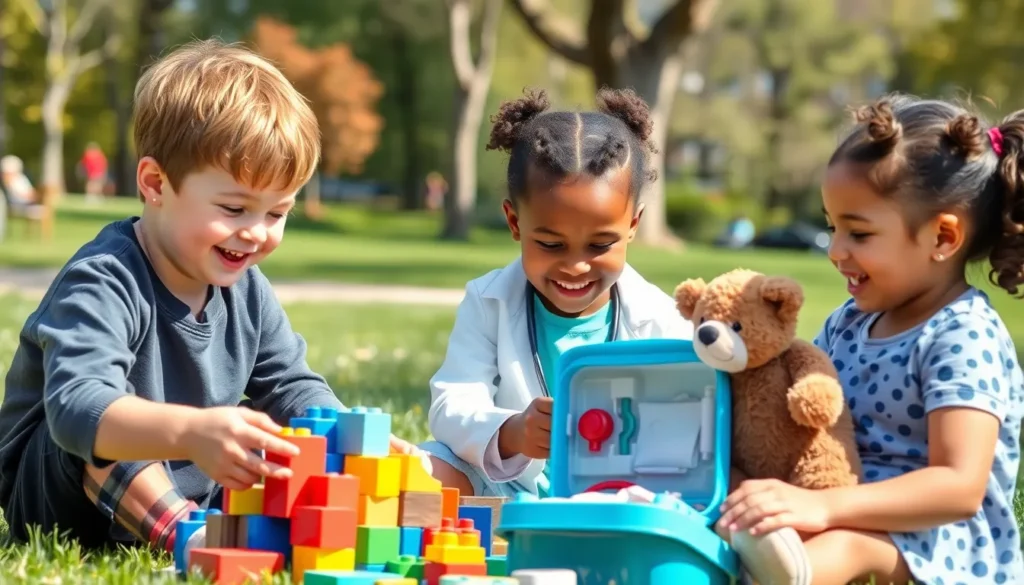
Play significantly contributes to child development, helping foster essential skills across various domains. Engaging in play offers children the chance to grow cognitively, socially, and emotionally.
Cognitive Development
Cognitive development thrives during play, as children solve problems and think critically. Activities like puzzles and building blocks challenge their minds, enhancing spatial awareness and logical reasoning. Each problem solved during these interactions boosts their confidence and reinforces their ability to tackle future tasks. Moreover, imaginative play, such as pretending to be a doctor or a teacher, stimulates creativity and nurtures innovative thinking. Research supports that children learning through play retain information better and apply knowledge in different contexts.
Social Skills Development
Play serves as a foundation for social skills development in children. Interacting with peers during cooperative play teaches essential skills like negotiation and sharing. They learn to navigate conflicts and develop empathy through role-playing scenarios. Group activities encourage collaboration, fostering a sense of belonging and teamwork. Children experience diverse perspectives, which enhances their ability to relate to others. Social competence gained through play lays the groundwork for successful relationships throughout their lives.
Emotional Regulation
Emotional regulation is significantly influenced by play, helping children understand and manage their feelings. During imaginative scenarios, they explore different emotions and practice responses to various situations. Role-play allows for safe expression of feelings, creating awareness of emotional dynamics. Children who engage in pretend play often demonstrate better emotional intelligence and resilience. Moreover, through play, they learn coping strategies for dealing with real-life challenges, contributing to their emotional well-being.
Types Of Play
Children engage in various types of play, each contributing uniquely to their development. Understanding these types helps parents and educators support a child’s growth effectively.
Free Play
Free play allows children to explore and create without restrictions. They decide on the activities and set their own rules, fostering independence and creativity. During this type of play, children manipulate materials, invent scenarios, and express themselves freely. Such experiences enhance critical thinking skills, as children navigate their own ideas and solutions. Examples include playing with toys, climbing structures, or simply engaging in imaginative games. This unstructured time is vital for building self-confidence and resilience.
Structured Play
Structured play involves organized activities with specific rules or objectives. Examples include team sports, board games, and guided art projects. These play types teach children discipline, cooperation, and following directions. Adults often facilitate structured play, helping children to work towards goals and enhancing their ability to focus. Children also develop social skills through this type of play, learning to communicate effectively with peers and resolve conflicts. Overall, structured play balances creativity with purpose, enhancing both cognitive and social development.
Cooperative Play
Cooperative play emphasizes teamwork and collaboration. Children work together towards a common goal, such as building a fort or completing a group project. This type of play builds strong social skills, including sharing, negotiation, and empathy. Interaction during cooperative play fosters emotional intelligence as children learn to recognize and respond to each other’s feelings. Successful cooperation strengthens friendships and builds connections, vital for healthy social development. Engaging in cooperative play allows children to experience the value of collaboration and enhances their ability to work well with others.
Benefits Of Play
Play serves multiple important roles in a child’s growth and development, leading to various benefits that enhance overall well-being.
Encouragement Of Creativity
Imaginative play fosters creativity by allowing children to develop unique ideas and solutions. They explore different scenarios through role-playing and building, which sparks innovative thinking. Engaging with various materials inspires artistic expression and exploration. In environments rich in resources, children often demonstrate heightened creativity through diverse play activities. Unrestricted play encourages them to construct stories and environments, showcasing their limitless imagination. This exploration of creativity lays the foundation for problem-solving skills they’ll use throughout life.
Physical Health Benefits
Active play significantly contributes to physical health by enhancing coordination, strength, and overall fitness. Children engaging in outdoor activities build muscles while improving balance and agility. Regular physical activity through play reduces the risk of obesity and promotes cardiovascular health. They often develop motor skills by running, jumping, and climbing, which are crucial for their development. Thus, playtime not only supports physical health but also creates a connection with nature and enhances children’s overall well-being.
Language Development
Playful interactions greatly enhance language development in children. Engaging in dialogue during play scenarios promotes vocabulary expansion and comprehension. Children often practice language skills while negotiating roles and participating in collaborative games. This interaction encourages confidence in expressing thoughts and emotions verbally. Play also allows for experimentation with new words and phrases, essential for effective communication. Exposure to social scenarios during play nurtures literacy and conversational abilities, laying the groundwork for stronger language skills as they grow.
Play is an indispensable element in a child’s development journey. It nurtures creativity and encourages social interactions while enhancing emotional and cognitive skills. Through various forms of play, children learn to navigate their world, develop resilience, and express themselves effectively.
Parents and caregivers play a crucial role in facilitating this process by providing diverse opportunities for exploration. Understanding the different types of play allows adults to support children’s growth in meaningful ways. Prioritizing playtime not only enriches a child’s learning experience but also lays the foundation for well-rounded individuals prepared to tackle future challenges. Embracing the power of play is essential for fostering a thriving developmental environment.