







Sensory development is like the ultimate superhero training for the brain. From the moment a baby enters the world, their senses kick into high gear, ready to take on everything from the sweet smell of mom’s cookies to the bewildering sounds of a vacuum cleaner. It’s a wild ride that shapes how they interact with their environment and learn about life.
Understanding Sensory Development
Sensory development refers to how infants interact with their environment using their senses. Active engagement begins at birth, laying the groundwork for future cognitive skills and social interactions.
Definition of Sensory Development
Sensory development encompasses the process by which a baby learns through sight, sound, touch, taste, and smell. It involves the ability to interpret sensory information from the surroundings. Key milestones occur as babies explore textures, colors, and sounds, which influence their emotional and cognitive growth. Development in this area fosters critical thinking skills and aids communication as children grow. Without proper sensory engagement, a child’s ability to understand their environment may be limited.
Stages of Sensory Development
Sensory development progresses through distinct stages during infancy. First, during the newborn stage, vision and hearing become more acute, allowing for the recognition of familiar faces and sounds. By three months, babies show increased interest in colorful objects and can engage with toys that produce sounds. At six months, tactile exploration intensifies as they begin to grasp and manipulate objects using their hands. Between nine and twelve months, the understanding of cause and effect through sensory experiences becomes evident. Each stage plays an essential role in shaping a child’s ability to process sensory information effectively.
Importance of Sensory Development
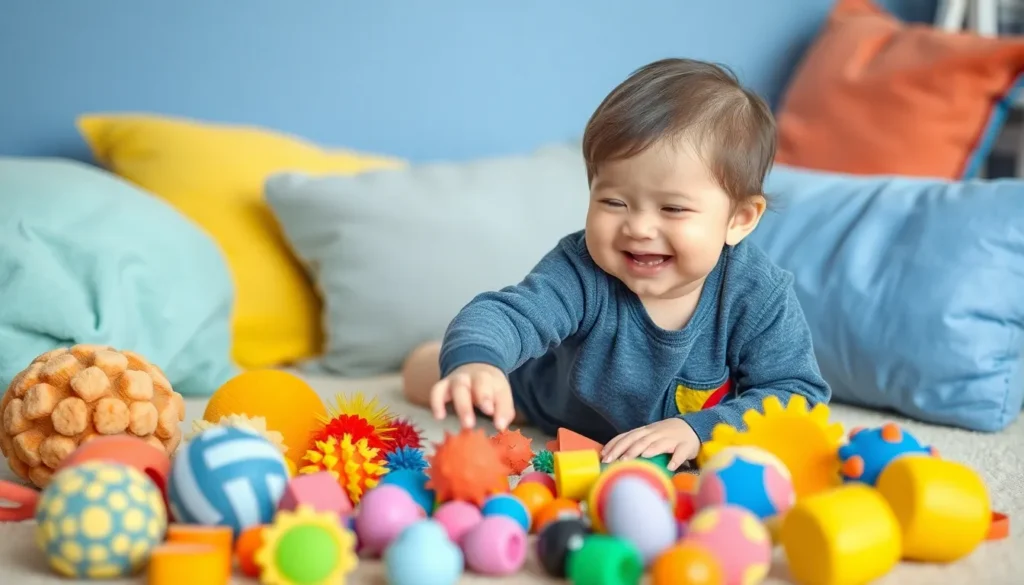
Sensory development plays a crucial role in a child’s growth. Engaging with the environment through senses helps infants process information and interact meaningfully.
Role in Early Childhood
Sensory experiences shape cognitive and motor skills. Engaging with various textures, colors, and sounds fuels curiosity and exploration, vital for early problem-solving. For instance, babies who play with different textures develop fine motor skills faster than those who do not. They learn to differentiate between objects and enhance spatial awareness. Social interactions often stem from sensory play, fostering communication and relationships. Observing reactions to sensory stimuli enables caregivers to support development effectively.
Impact on Learning and Behavior
Sensory development significantly influences learning and behavior. Children exposed to diverse sensory experiences tend to demonstrate better focus and attention in structured settings. Studies show that multisensory learning enhances memory retention, allowing them to grasp concepts more easily. Moreover, sensory-rich environments reduce anxiety, helping children feel secure and confident. As children explore, they communicate preferences and emotions, building a foundation for healthy social skills. Positive sensory interactions create pathways for lifelong learning and adaptation.
Factors Affecting Sensory Development
Numerous elements influence sensory development during infancy and early childhood. Understanding these factors can help caregivers provide a supportive environment.
Genetics and Heredity
Genetic makeup plays a significant role in shaping sensory abilities. A child’s sensory processing can show variations based on inherited traits from parents. For instance, some children may naturally possess heightened sensitivity to specific stimuli, while others may display less sensitivity. These genetic differences affect how each child responds to sensory experiences. Studies indicate that sensory processing disorders often run in families, making the investigation of hereditary links essential. Identifying these patterns can guide support for children who may need targeted interventions for their sensory development.
Environmental Influences
Environment contributes greatly to sensory development. A rich sensory environment filled with diverse experiences encourages exploration. Access to varied textures, sounds, and sights enhances sensory integration. For example, children who engage in activities like playing with sand or water may experience improved tactile skills. Social interactions also provide vital sensory feedback, strengthening communication abilities. Research reveals that children in multisensory-rich environments demonstrate improved attention and focus. Caregivers can foster beneficial sensory experiences by providing safe, stimulating surroundings that promote learning and growth.
Activities to Enhance Sensory Development
Engagement in various activities significantly supports sensory development. Exploring simple, hands-on experiences allows children to interact and learn effectively.
Sensory Play Ideas
Tactile experiences, such as playing with dry rice or beans, promote fine motor skills while enhancing sensory input. Water play provides opportunities for splashing, pouring, and mixing, which fosters creativity. An inviting sensory bin filled with rice, sand, or water beads engages little hands and encourages exploration. Modeling dough enables children to shape, pinch, and roll, enhancing both tactile and social skills. Art materials, like finger paints or textured paper, invite children to express their creativity while stimulating their sense of touch and sight. Collectively, these activities nurture critical thinking and problem-solving abilities.
Importance of Outdoor Exploration
Outdoor exploration plays a critical role in sensory development. Nature presents diverse stimuli, such as changing weather, varying textures, and different sounds. Experiencing playground structures nurtures both gross motor skills and spatial awareness while providing essential sensory feedback. Visits to parks or beaches allow children to interact with natural elements, such as grass, sand, and water. Engaging in activities like climbing, running, or digging encourages physical play and sensory inquiry. Exposure to fresh air and wide-open spaces fosters curiosity and supports emotional well-being, shaping children’s understanding of their environment.
Sensory development is a vital aspect of a child’s early growth. By engaging with their environment through various senses, infants lay the groundwork for cognitive and emotional skills. The stages of sensory exploration not only enhance problem-solving abilities but also foster social interactions that are crucial for effective communication.
Creating a rich sensory environment is essential for nurturing curiosity and confidence. Caregivers play a significant role in facilitating these experiences through hands-on activities and outdoor exploration. As children navigate their surroundings, they build the necessary skills for lifelong learning and adaptation. Prioritizing sensory development ensures that children are well-equipped to understand and interact with the world around them.